New York, NY—I have written about racism and discrimination in sports media for years. I’ve chronicled the subtle exclusions, the closed-door credentialing decisions, the whispered rationales that somehow never make it into official policy. And yet, here we are again.
When veteran journalist Jim Trotter — formerly of The Athletic — became only the second Black journalist ever to receive the equivalent of the Pro Football Writers’ lifetime achievement award, it should have been a moment of pure celebration. Instead, it became a referendum.
Trotter’s 53-page lawsuit against the National Football League reverberated across American sports. He alleged that the league and its broadcast arm declined to renew his contract after he raised concerns about the lack of diversity among executives, coaches, and journalists. He further claimed that two team owners dismissed those concerns using explicitly bigoted rhetoric.
This was not an isolated complaint. It came on the heels of other race-related disputes involving the NFL: Colin Kaepernick’s collusion grievance, Brian Flores’ discrimination lawsuit, and the wrongful termination case brought by Jon Gruden, who accused Commissioner Roger Goodell and others of forcing his resignation by leaking racist, sexist, and homophobic emails he sent years earlier.

To defend itself in Trotter’s case, the NFL hired Loretta Lynch, the first Black woman to serve as U.S. attorney general. Eventually, Trotter announced a settlement. The league agreed to fund a journalism scholarship for students at historically Black colleges — a meaningful gesture, particularly given his connection to Howard University.
But scholarships do not dismantle systems:
Every year, Commissioner Goodell acknowledges the league’s diversity shortcomings during Super Bowl week. Yet when Black media members raise concerns about unequal access, inconsistent credentialing standards, or exclusionary practices, those concerns often fall on deaf ears.
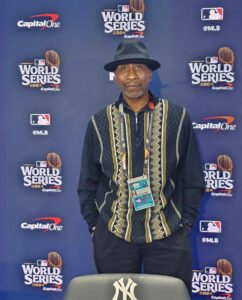
I have covered one NFL team since 2017. For years, I was credentialed without issue. Then, after I began questioning their credential policies and asking for transparency, a new requirement suddenly appeared: I must now be accredited by the Pro Football Writers of America to continue covering the team daily — even though I am not a beat reporter and that requirement did not exist when I started.
Rules that materialize only after scrutiny are not policies. They are barriers.
This is the credentialing contradiction.
Black athletes are celebrated.
Black culture is monetized.
But Black media ownership is policed.
Independent Black outlets are routinely told they are “not established enough,” must meet newly invented standards, or lack affiliations that were never required before. Meanwhile, legacy outlets — often with declining readership — are granted automatic access.
The message is clear:
Promote us. Amplify us. Celebrate us.
But do not challenge us — and do not expect equal access.
Other leagues have shown that progress is possible. Organizations such as the National Hockey League, Major League Baseball, WNBA, and Major League Soccer have taken meaningful steps toward more inclusive credentialing. They are not flawless, but they have demonstrated greater openness to independent outlets, diverse ownership, and community-based media voices.
By contrast, the NFL, the National Basketball Association, Ultimate Fighting Championship, many bowl games, and some universities still rely on opaque, inconsistent systems that allow decision-makers to operate without meaningful oversight.
And that is the heart of the problem: self-governance without accountability.
If there were an independent entity overseeing credentialing grievances — a neutral body empowered to investigate complaints, audit practices, and impose consequences for discriminatory behavior — these disparities would not persist. When there are real repercussions for bias, unfair practices stop immediately. Transparency becomes the standard, not the exception.
But as long as leagues and teams are allowed to police themselves, to investigate themselves, and to determine whether they have done anything wrong, the cycle will continue. Disparity will be explained away as “policy.” Bias will be reframed as “standards.” And exclusion will be labeled “discretion.”
Self-regulation in matters of access and equity is not reform. It is preservation.
Black-owned media outlets are not asking for special privileges. We are asking for equal treatment — nothing more, nothing less. If standards exist, they should be clear, consistent, and applied universally. If credentials are denied, there should be a transparent appeals process. If diversity is truly valued, it must extend beyond the field and into the press box.
Because the press box shapes narrative. It determines which questions are asked, which stories are elevated, and whose voices are legitimized.
Until there is independent oversight, enforceable consequences, and true transparency in credentialing practices, the question will remain:
Do these leagues genuinely want equity — or simply the appearance of it?
If self-governance continues unchecked, the disparities will continue as well. And that is not progress. That is stagnation disguised as reform.