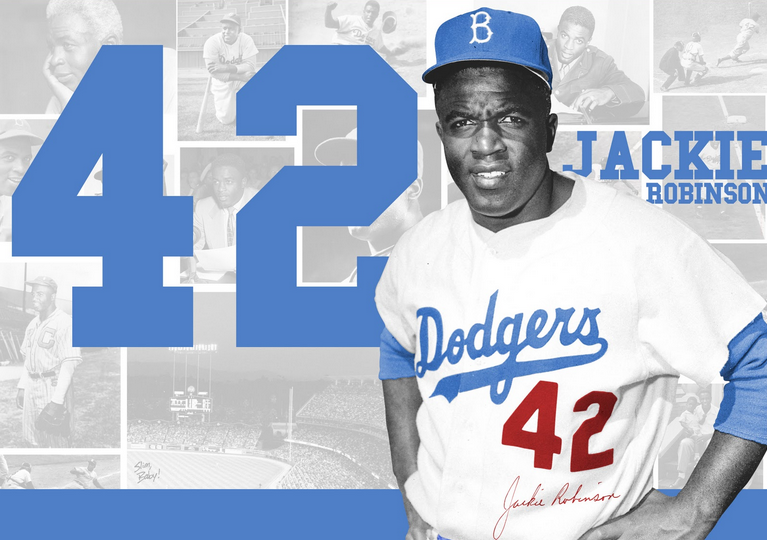
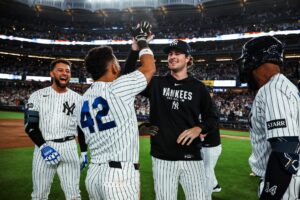
New York, NY——On April 15, Major League Baseball does something remarkable: every player, coach, and manager wears the number 42 in honor of Jackie Robinson. It is one of the most visible, unified tributes in all of sports — a league-wide acknowledgment that Robinson didn’t just change baseball, he changed America.
But symbolism, no matter how powerful, is not the same as progress.
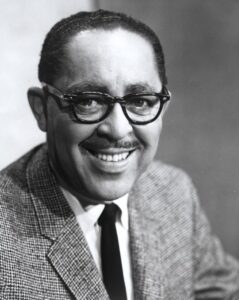
Robinson’s legacy is often framed through statistics, highlights, and milestones. What gets less attention is the cost of his courage — and the ecosystem of people who fought alongside him. One of those figures was Wendell Smith, a Black reporter who traveled with Robinson through the 1946 minor-league season and the 1947 MLB season. Smith documented history in real time while enduring segregation himself, often denied access, accommodations, and professional respect because of his race.
That part of the story matters — especially now.
Because in 2026, the fight for access has not disappeared. It has evolved.
Today, Black athletes are celebrated across every major sport. Their images drive billion-dollar industries. Their culture shapes global trends. But when it comes to Black media ownership — particularly independent outlets — the doors are not nearly as open.
Instead, those outlets are met with familiar language:
“There is no space.”
“You are not established enough.”
“Credentials are reserved for mainstream organizations.”
These phrases may sound neutral. They are not.
They are the modern-day gatekeeping tools that determine who gets to tell the story — and who gets shut out of the room entirely.
Independent Black media outlets are routinely asked to meet vague or shifting standards. They are told to demonstrate “consistent, in-depth coverage,” to prove legitimacy in ways that legacy outlets never had to. Meanwhile, those same legacy organizations — many with shrinking audiences and limited cultural reach — continue to receive automatic access.
The message is unmistakable:
Promote us. Amplify us. Celebrate us.
But do not question us — and do not expect equal footing.
To be clear, not every league operates the same way. Organizations like National Hockey League, Major League Soccer, and MLB have made meaningful — if imperfect — strides toward more inclusive credentialing. They have shown a willingness to recognize that media is evolving, and that diverse ownership and community-rooted voices add value, not risk.
But others, including the National Football League, the National Basketball Association, Ultimate Fighting Championship, WNBA, and segments of collegiate athletics, continue to rely on opaque systems that lack transparency and accountability.
And that is where the problem deepens.
When leagues control access, define standards, and evaluate complaints against themselves, fairness becomes subjective. Disparities can be explained away as “policy.” Bias can be reframed as “criteria.” Exclusion becomes a matter of “discretion.”
That is not oversight. That is insulation.
If Jackie Robinson taught us anything, it is that systems do not change simply because they are asked to. They change when they are forced to confront inequity directly — and when there are consequences for maintaining it.
Imagine, for a moment, an independent governing body overseeing media credentialing across professional sports. A neutral entity with the authority to audit decisions, investigate complaints, and enforce consistent standards. In that environment, access would not hinge on relationships or perception. It would be rooted in fairness.
Right now, that kind of accountability does not exist.
And without it, the cycle continues.
April 15 should be more than a celebration of what was accomplished in 1947. It should be a measuring stick for where we stand today.
Because honoring Jackie Robinson is not just about wearing 42.
It is about asking whether the institutions that celebrate him are willing to uphold what he stood for: equality, access, and justice — not just on the field, but in every space connected to it.
Black-owned media outlets are not asking for special treatment. They are asking for clarity. Consistency. Fair access. The same opportunity to cover the games, tell the stories, and hold institutions accountable.
That is not a radical demand. It is the bare minimum of what progress should look like.
If Robinson were alive today, the tribute might move him. But the question is whether the reality would.
Because the number on the jersey is symbolic.
Access is substantive.
And right now, those two things are not aligned.