Florham Park, NJ—-The New York Jets enter the 2026 NFL Draft with a clear defensive focus at the top—and major questions on offense.
After investing heavily on defense in free agency, New York is widely expected to use the No. 2 overall pick on an edge rusher, with David Bailey and Arvell Reese emerging as the primary candidates. Both prospects offer high-end upside, though Bailey is viewed as more NFL-ready while Reese brings longer-term potential.
That approach, however, leaves a glaring issue: how to fix an offense that finished near the bottom of the league in both scoring and total yardage last season.
Turning attention to offense at No. 16
The expectation is that the Jets will address that problem with their second first-round pick at No. 16. Wide receiver is the most likely target, though how they get their guy remains uncertain.
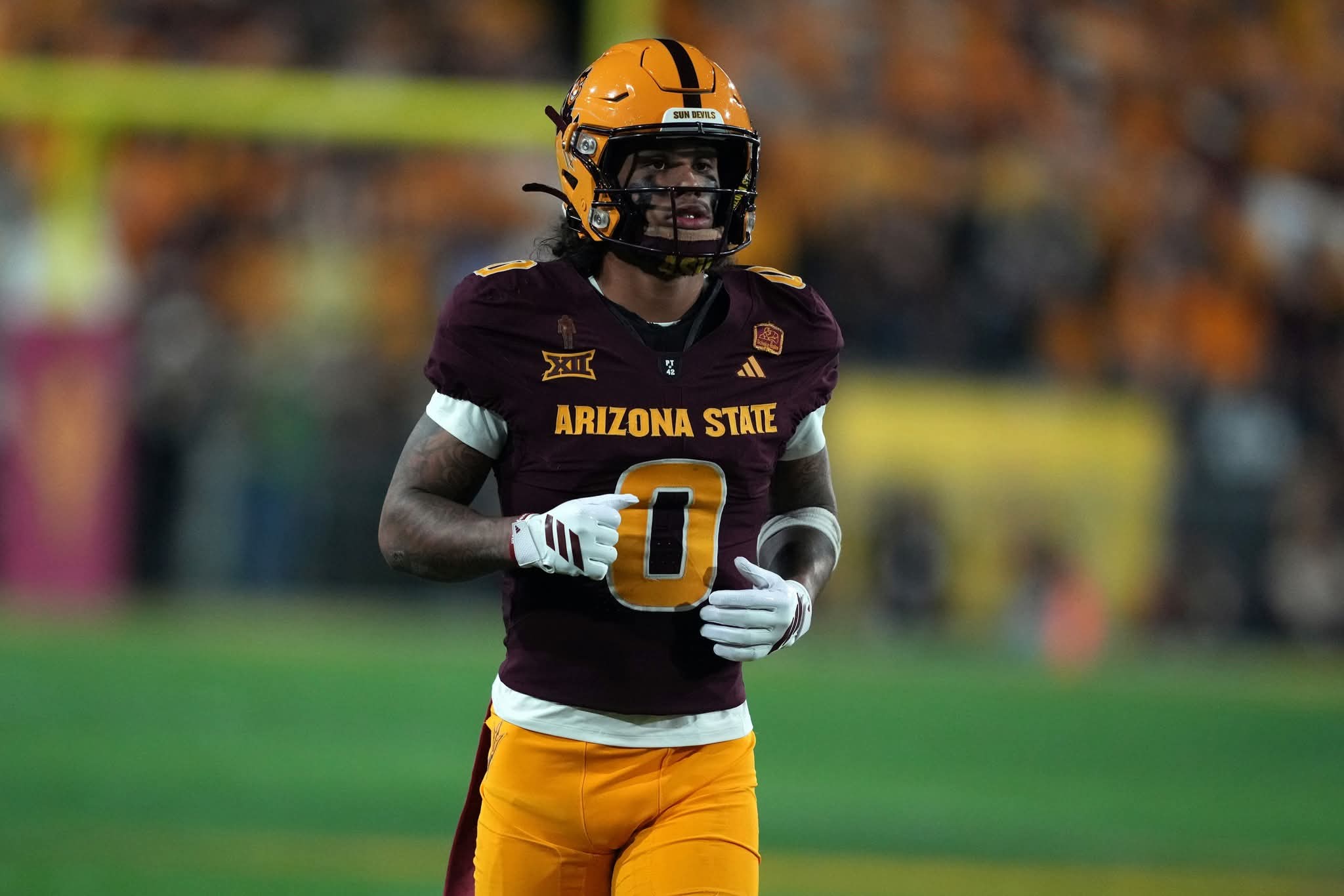
One name generating significant buzz is Jordyn Tyson out of Arizona State. Some evaluators consider him the top receiver in the entire class, but landing him may require moving into the top 10—potentially costing New York valuable draft capital, including an additional second-round pick.
Another option is Carnell Tate from Ohio State, though league sentiment suggests the Jets may not value him as highly as Tyson.
Beyond those two, a cluster of receivers—including Makai Lemon, Omar Cooper Jr., Denzel Boston, and KC Concepcion—are viewed as similarly graded prospects. If the board falls that way, New York could opt to trade down from No. 16 and accumulate additional picks while still addressing the position.
General manager Darren Mougey has expressed confidence in the overall depth of the receiver class, noting the variety of skill sets available.
A potential wildcard at tight end
If the receiver board doesn’t break favorably, the Jets could pivot to a different kind of playmaker: Oregon tight end Kenyon Sadiq.
Sadiq combines elite speed with size, making him a matchup problem across the formation. His versatility could appeal to offensive coordinator Frank Reich, who has a history of maximizing tight ends in creative ways. Pairing Sadiq with last year’s second-round pick, Mason Taylor, could give the Jets a dynamic two-tight-end system.
The bigger picture
No matter the path, the mission is clear: surround key offensive pieces like Garrett Wilson and Breece Hall with more talent.
So far, the Jets’ offensive additions have been limited, including quarterback Geno Smith and guard Dylan Parham—moves that haven’t fully addressed last season’s struggles.
Meanwhile, the decision at No. 2 remains tightly guarded. Odds and projections have shifted between Bailey and Reese, reflecting the organization’s internal debate between immediate impact and long-term upside.
Head coach Aaron Glenn, coming off a difficult season, may lean toward a player who can contribute right away—giving Bailey a slight edge in many projections.
Bottom line
The Jets are poised to shape their identity in this draft: defense first at the top, offense soon after. Whether they trade up, trade down, or stay put, their ability to land impact playmakers—especially on offense—will go a long way in determining how quickly they can turn things around.