Philadelphia, PA—-The New York Yankees placed a strong emphasis on pitching depth and athletic position players during the first two days of the 2026 MLB Draft, assembling a class that features power arms, accomplished collegiate hitters, and several intriguing high school prospects.
From hard-throwing left-handers to polished infielders and versatile two-way talent, the Yankees focused on adding players capable of strengthening the organization’s farm system for years to come.
Day 1 Highlights
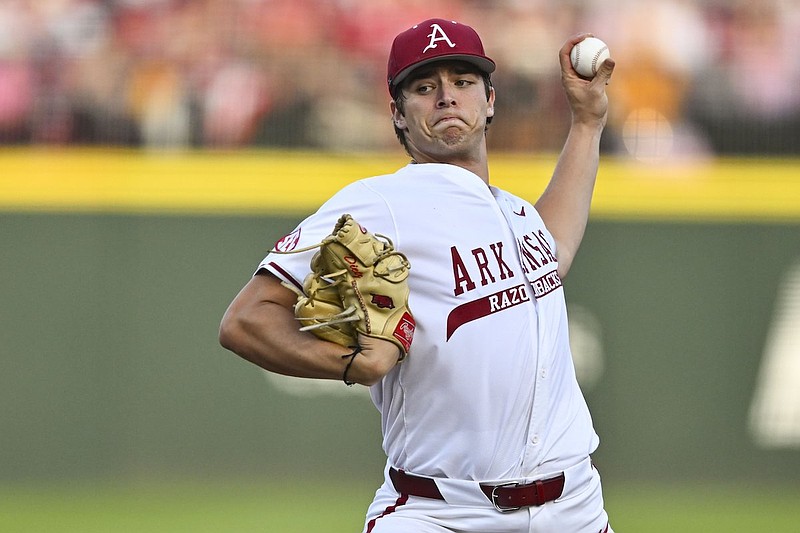
Round 1 (No. 35 Overall): Hunter Dietz, LHP – Arkansas
The Yankees opened their draft by selecting Arkansas left-hander Hunter Dietz, a strikeout specialist who returned in impressive fashion after recovering from elbow surgery in 2024.
Dietz made 16 starts during the 2026 season, compiling a 3.57 ERA over 85.2 innings while striking out 131 hitters. His dominant swing-and-miss ability translated to an elite 13.8 strikeouts per nine innings, ranking among the nation’s top collegiate pitchers.
Although injuries interrupted his early college career, the Yankees are betting on his electric arsenal and frontline potential.
Round 2 (No. 63 Overall): Sean Duncan, LHP
New York continued adding left-handed pitching with Canadian standout Sean Duncan.
The 6-foot-3 southpaw impressed scouts before undergoing Tommy John surgery in 2025. Prior to the injury, Duncan showcased a fastball reaching 95 mph and demonstrated advanced command along with a polished three-pitch repertoire.
Widely viewed as one of Canada’s premier pitching prospects, Duncan had committed to Vanderbilt before hearing his name called by the Yankees.
Round 3 (No. 99 Overall): Brendan Brock, C – Oklahoma
The Yankees strengthened their catching depth by selecting Oklahoma backstop Brendan Brock.
Brock enjoyed a productive collegiate season, batting .302 while posting a .921 OPS. He also delivered 13 home runs and 11 doubles across 65 games, giving New York another offensive-minded catcher with power potential.
Round 4 (No. 127 Overall): Paul Gutierrez-Contreras, OF – Cal State Fullerton
One of the more explosive offensive performers in the draft, Gutierrez-Contreras turned heads after hitting .346 with a 1.074 OPS, 14 home runs and 45 RBIs during his sophomore campaign.
The 20-year-old outfielder combines athleticism with developing power, making him an intriguing long-term prospect.
Day 2 Continues the Trend
Round 5 (No. 160): Bear Harrison, C – Texas A&M
New York doubled down at catcher by selecting Bear Harrison, whose offensive production consistently improved throughout his college career.
After transferring from St. Mary’s to Texas A&M, Harrison developed into one of the Aggies’ most dangerous hitters, finishing with a 1.121 OPS during his final season while producing 27 extra-base hits and demonstrating outstanding plate discipline.
Round 6 (No. 189): Andrew Gonzalez, 3B – Americas High School (Texas)
The Yankees added one of Texas’ better prep infielders in Andrew Gonzalez.
The left-handed hitting third baseman had been committed to Texas Tech and entered the draft as one of the state’s highest-rated corner infield prospects.
Round 7 (No. 218): Michael Harpster, RHP – East Tennessee State
Harpster brings polish rather than overpowering velocity.
The right-hander consistently improved during his collegiate career while relying on command, deception and an effective mix of pitches. Across three seasons, he struck out more than 200 hitters while continuing to lower his ERA each year.
Round 8 (No. 248): Luke Pettitte, Two-Way Player – Dallas Baptist
One of the most recognizable names in the draft belongs to Luke Pettitte, the son of former Yankees World Series champion Andy Pettitte.
Luke contributed both on the mound and at the plate during his college career. As a pitcher, he recorded a 3.19 ERA while displaying excellent control. Offensively, he enjoyed a breakout season, batting .337 with 16 home runs and a 1.096 OPS, giving New York multiple developmental options.
Round 9 (No. 278): David Leslie, RHP – Pittsburgh
Leslie offers versatility after serving as both a starter and reliever throughout his collegiate career.
Following three seasons at Grove City College before transferring to Pittsburgh, he compiled a career ERA below 4.00 while demonstrating solid command and dependable durability.
Round 10 (No. 308): Bayram Hot, SS – Louisville
Queens native Bayram Hot returns to New York after starring at Louisville.
The former Archbishop Molloy standout hit .330 with a .976 OPS, adding 15 doubles and nine home runs during his final collegiate season.
Round 11 (No. 338): Anthony Potestio, SS – UC San Diego
Potestio provides another athletic middle infielder after producing consistently over three seasons at UC San Diego.
The left-handed hitter finished his college career with an .881 OPS while showing dependable offensive production.
Round 12 (No. 368): Austin Berggren, RHP – Miami (Ohio)
Primarily utilized out of the bullpen, Berggren developed into a strikeout machine.
He recorded 61 strikeouts in just over 44 innings while issuing only 13 walks, highlighting both power stuff and strong command.
Round 13 (No. 398): Lee Garris, OF – Norfolk, Virginia
The Yankees selected prep outfielder Lee Garris, an athletic prospect committed to James Madison University.
Round 14 (No. 438): Diego Castellanos, OF – St. Mary’s
Castellanos concluded his collegiate career with consecutive productive seasons, finishing his final campaign batting .382 while posting a 1.012 OPS.
He added 21 doubles, six home runs and 50 RBIs, giving the Yankees another polished offensive player capable of developing into organizational depth.
Remaining Selections
The Yankees still held selections in Rounds 15 through 20 as Day Two concluded, with those picks expected to further strengthen an already balanced draft class.
Draft Strategy
The Yankees’ 2026 draft reflected a clear organizational philosophy: stockpile quality pitching, add experienced college bats, and invest in athletic players with developmental upside.
By selecting multiple left-handed pitchers, two productive catchers, versatile infielders, and intriguing high school talent, New York assembled a well-rounded class that could significantly impact the organization’s future as these prospects begin their professional careers.