Uncasville, Conn. — The road to the Naismith Basketball Hall of Fame is measured in championships, wins, records and individual accomplishments, but for the Class of 2026, the journey to basketball immortality is about far more than numbers.
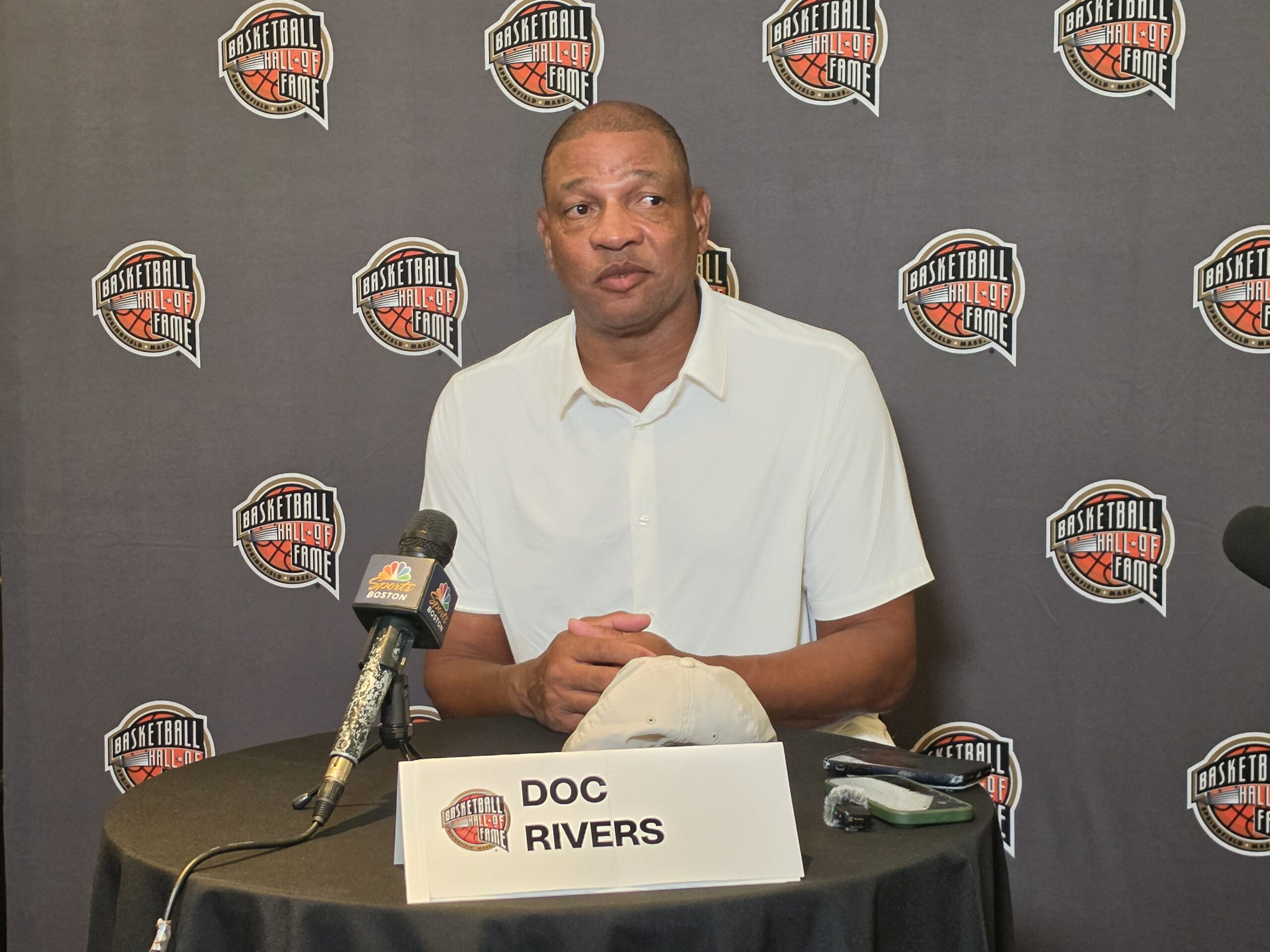
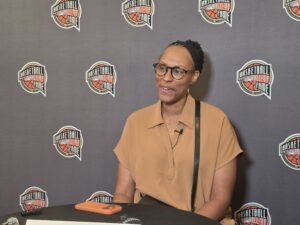
On Friday, the newest members of the Basketball Hall of Fame gathered at Mohegan Sun for their official media availability, reflecting on careers that took them from different corners of the basketball world to the same destination: Springfield.
The Class of 2026 represents virtually every part of the sport — players, coaches, an official, a contributor and one of the most influential women’s national teams in basketball history. The class includes Candace Parker, Amar’e Stoudemire, Elena Delle Donne, Chamique Holdsclaw, Doc Rivers, Mark Few, Mike D’Antoni, Joey Crawford and the 1996 U.S. Women’s National Team.
And listening to the inductees speak about the honor, one message became clear: the Hall of Fame is not simply about what they accomplished. It is about who helped them get there.
Doc Rivers: Still Fighting for the Next Generation
For Rivers, the honor comes while he is still actively coaching, something he specifically wanted.
“I wanted to get in while I was still coaching, and I achieved that,” Rivers said during the media availability. He also revealed that his Hall of Fame selection hasn’t stopped him from advocating for other coaches.
Rivers said he has continued pushing for coaches such as Gregg Popovich and Rick Carlisle to receive recognition, arguing that active coaches should not necessarily have to wait until their careers are over to be considered.
“I’ve always got something I’m fighting for,” Rivers said.
That mindset perhaps explains Rivers’ career as much as his championship does.
His 2008 Boston Celtics championship remains the centerpiece of his coaching résumé, but his impact stretches across multiple organizations and generations of players.
Now that he has reached Springfield, Rivers isn’t simply closing the book on his career.
He’s using the Hall of Fame platform to keep advocating for those he believes belong alongside him.
Candace Parker: A Career That Changed Expectations
Parker’s induction represents one of the most decorated careers in women’s basketball history.
The former Tennessee star won two NCAA championships, became the first WNBA player to win Rookie of the Year and MVP in the same season, captured two league MVP awards, three WNBA championships and a Finals MVP. She also won two Olympic gold medals.
But Parker’s significance extends beyond the trophies.
She became one of the defining figures of a generation that helped transform women’s basketball into a bigger, more visible and more commercially significant sport.
Her Hall of Fame moment comes alongside the 1996 U.S. Women’s Olympic team — a group whose dominance helped establish the foundation for the WNBA later that same year.

Amar’e Stoudemire: Power, Passion and the Phoenix Revolution
Stoudemire’s journey to the Hall is tied closely to an era that changed how basketball could be played.
As a dominant pick-and-roll big man, Stoudemire averaged 18.9 points and 7.8 rebounds during his 14-year NBA career and became one of the defining players of the Phoenix Suns’ high-octane offense.
His career intersected perfectly with D’Antoni’s philosophy and Steve Nash’s brilliance.
That connection helped produce one of the most entertaining offensive teams of the 2000s.
Now, Stoudemire enters the Hall alongside the coach who helped maximize his abilities.

Mike D’Antoni: The Visionary
D’Antoni’s induction is a recognition not simply of wins, but of influence.
His “Seven Seconds or Less” Suns helped accelerate the NBA’s evolution toward pace, spacing and three-point shooting.
The system became bigger than Phoenix.
It became part of the blueprint for modern NBA basketball.
D’Antoni’s presenters include Jerry Colangelo, Bob McAdoo, Steve Nash, Stoudemire and Rod Thorn — a fitting collection of people who witnessed different chapters of his career.
Elena Delle Donne: Excellence Despite the Obstacles
Delle Donne’s path to Springfield was anything but ordinary.
She became a two-time WNBA MVP, seven-time All-Star, Olympic gold medalist and 2019 WNBA champion with Washington. She also finished her WNBA career as the league’s career leader in free-throw percentage.
But statistics only tell part of her story.
Her career was marked by the ability to overcome obstacles and continue performing at an elite level.
Her Hall of Fame selection gives the sport another opportunity to recognize not just her production, but the perseverance behind it.

Chamique Holdsclaw: A Pioneer Before Her Time
Before women’s basketball became the global phenomenon it is today, Holdsclaw was already carrying enormous expectations.
The No. 1 overall pick in 1999, Holdsclaw won three consecutive NCAA championships at Tennessee, earned two Naismith College Player of the Year awards and became a six-time WNBA All-Star.
Her induction gives Springfield another opportunity to celebrate a player whose influence reached from college basketball into the professional game.
Mark Few: Building Something That Lasted
Few’s Hall of Fame case was built over decades of consistency.
Since taking over at Gonzaga, Few transformed the program from a mid-major success story into a national powerhouse.
He became the winningest active coach by winning percentage and produced a program that has become a fixture on the national stage.
For Few, the honor isn’t just about victories.
It’s about the players, assistants, families and supporters who helped build Gonzaga into what it is today.
Joey Crawford: Four Decades in the Middle of the Action
Crawford’s path to Springfield is unique because he wasn’t scoring points or coaching teams.
He was responsible for making the calls.
The veteran official spent 39 seasons as an NBA referee, working 2,561 regular-season games, 374 playoff games and 50 NBA Finals games. He officiated every Finals from 1986 through 2015.
Few officials have been involved in as many significant moments in NBA history.
His induction recognizes the importance of officiating to the game itself.
The 1996 U.S. Women’s Olympic Team: More Than a Team
Perhaps the most powerful induction belongs to the 1996 U.S. Women’s National Team.
The roster featured legends including Lisa Leslie, Sheryl Swoopes, Dawn Staley, Teresa Edwards, Rebecca Lobo and Katrina McClain, with Tara VanDerveer serving as coach.
The team went undefeated in its competition and dominated opponents by more than 30 points per game. More importantly, its success helped create momentum for the launch of the WNBA later that year.
Their induction is therefore not simply a celebration of what happened on the court.
It is recognition of what happened because of them.
One Class, Nine Different Journeys
What makes the 2026 class so compelling is its diversity of experiences.
There is the superstar.
The coach.
The official.
The innovator.
The Olympic team.
The college legend.
The professional champion.
Yet they all arrived at the same place.
The Hall of Fame’s president and CEO, John L. Doleva, described the class as one that represents “the very best this sport has to offer,” pointing to the accomplishments of the players, coaches, referee, contributor and historic women’s national team.
On Saturday night, those careers officially become part of basketball history when the Class of 2026 is enshrined at Symphony Hall in Springfield.
For the inductees, however, the most meaningful part may not be the gold jacket, the Hall of Fame plaque or the standing ovation.
It may be the people who helped them get there.
Because ultimately, the Hall of Fame isn’t just a building filled with basketball memories.
It is a celebration of the people who changed the game — and the people who made it possible for them to do it.