LAS VEGAS, NV — In a city built on high stakes and bold moves, the LiUNA! NASCAR O’Reilly Auto Parts Series race brought plenty of both Saturday afternoon to the Nevada desert.
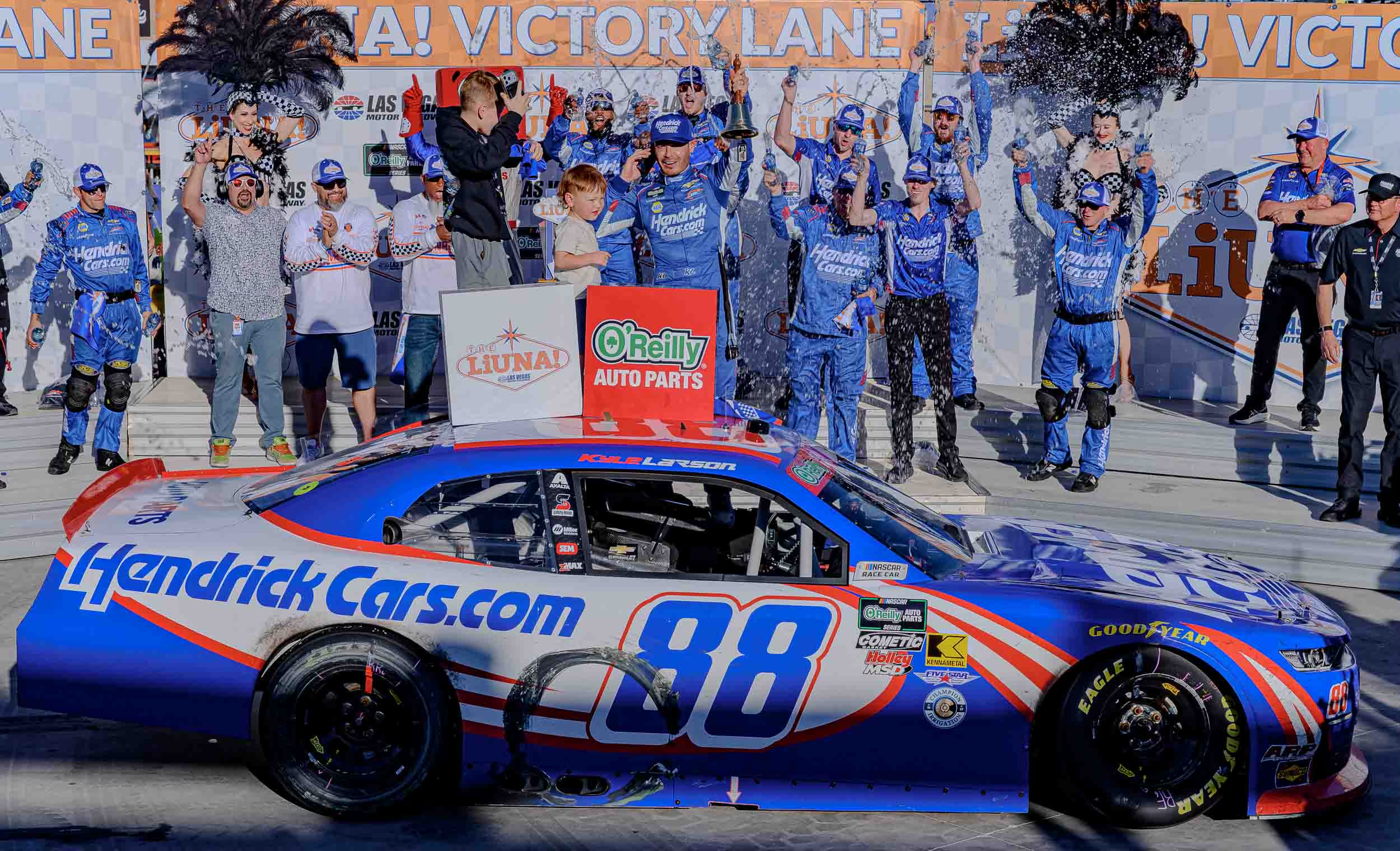
When the checkered flag finally waved over Las Vegas Motor Speedway, it was Kyle Larson standing in victory lane after a dominant run in the LiUNA! NASCAR O’Reilly Auto Parts Series race, reminding the field why he remains one of the most versatile drivers in all of motorsports.
From the moment the green flag dropped, the field wasted no time showing why Las Vegas remains one of the most challenging intermediate tracks on the NASCAR schedule.
Drivers immediately fanned out across the wide racing surface, searching for grip through multiple grooves in Turns 1 and 2. Some hugged the inside line hoping to shorten the corner, while others pushed high along the outside wall trying to build momentum down the straightaway.
Early in the race, several drivers took turns leading the pack as teams tried to determine which setup would survive the long green-flag runs that often define races at LVMS.
Larson, known throughout the garage for his ability to adapt to nearly any racetrack, took a patient approach early in the race.
Instead of forcing aggressive passes, he allowed the race to come to him.
Lap after lap, Larson studied the leaders ahead of him, carefully working through traffic while conserving his tires — a crucial factor on the abrasive Las Vegas surface.
By the time the race reached its middle stages, Larson had positioned himself exactly where he needed to be: within striking distance of the lead.
When the opportunity appeared, he seized it.
A strong restart and a perfectly timed move through the corner allowed Larson to take control of the race, and once he found clean air, the No. 88 machine became incredibly difficult to catch.
Pit strategy began reshuffling the running order as teams debated whether to chase stage points or gamble on track position for the final run.
Meanwhile, restarts continued to bring the intensity.
Las Vegas’ wide frontstretch often funnels drivers three-wide — sometimes even four-wide — into Turn 1. Every restart felt like a high-speed scramble as drivers fought for track position.
Some dove low across the apron while others rocketed around the outside lane inches from the wall.
Through it all, Larson remained calm and methodical, managing each restart with precision.
But while Larson’s performance captured the spotlight, the race also highlighted something just as important for the future of NASCAR — the continued rise of young African American drivers like Rajah Caruth and Lavar Scott who continue working their way through the sport’s competitive ladder.
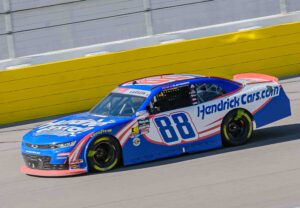
Caruth, one of NASCAR’s rising stars, once again showed the steady growth that has made him one of the most promising young drivers in the sport.
Caruth’s path into NASCAR is one of the most unique in modern motorsports. Beginning his career through online iRacing competitions, he quickly transformed virtual racing experience into real-world opportunities.
Now competing across NASCAR’s national series, Caruth continues to gain valuable experience at tracks like LVMS— a track that tests a driver’s patience, tire management and racecraft.
Every lap adds to the foundation of what many believe could become a long and successful NASCAR career.
A graduate of the NASCAR Drive for Diversity Program, Scott’s journey reflects NASCAR’s ongoing efforts to create opportunities for drivers from diverse backgrounds.
Though still early in his career, Scott’s development and consistency on track have already made him a driver many in the garage believe could soon move into NASCAR’s top touring series.
His progress is another reminder that the sport’s future continues to evolve.
Next Up: Darlington Raceway, Saturday March 21st @2:30 MST