
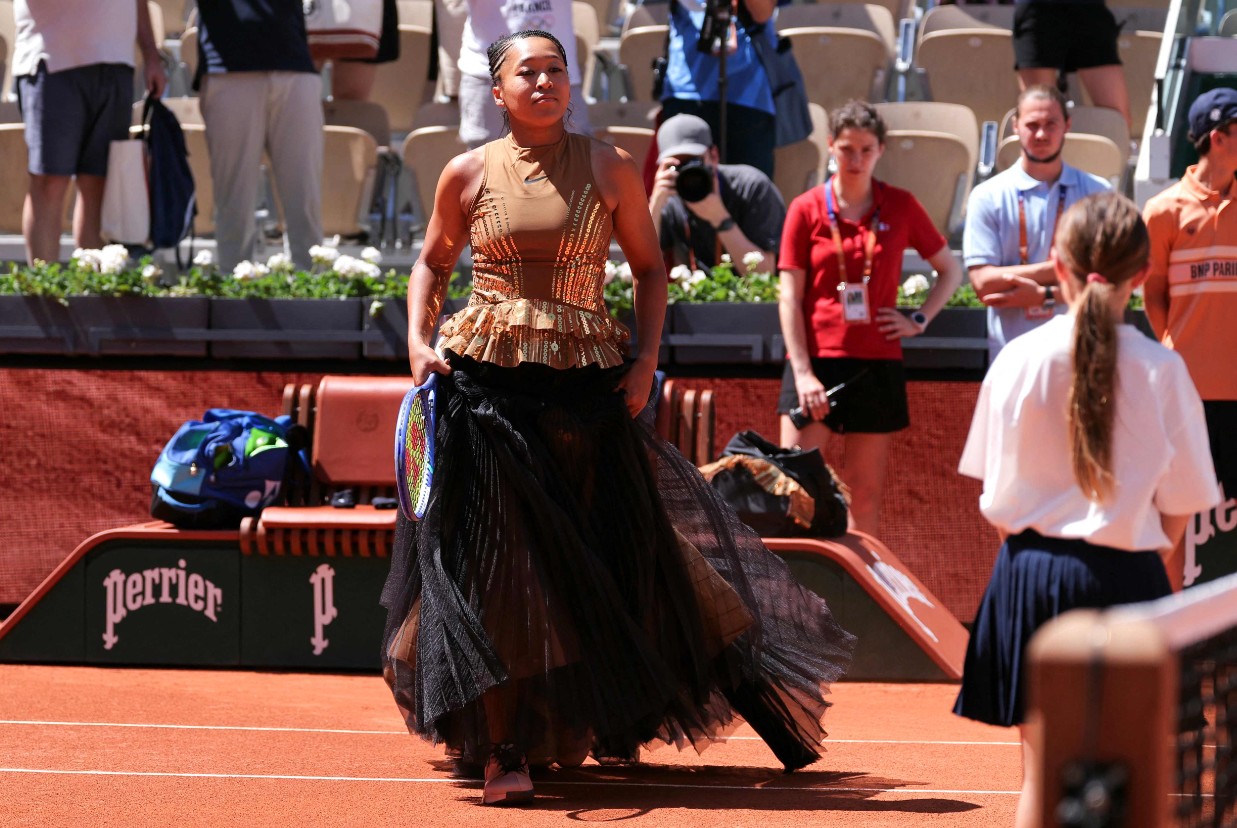
New York, NY—-Naomi Osaka’s story has never been just about Grand Slam titles, world rankings, or blistering serves. It is about identity, culture, representation, and the power of embracing every part of who you are. Those are stories that deserve to be told in full—and they are stories that Black-owned media outlets are uniquely positioned to tell.
Born to a Haitian father and a Japanese mother, Osaka has never shied away from celebrating both sides of her heritage. Throughout her career, she has spoken openly about the pride she feels representing Japan while also embracing her Black identity and using her platform to advocate for racial justice and equality.
That dual identity extends far beyond the tennis court.
Whether she’s walking into Wimbledon dressed in a kimono-inspired ensemble that honors Japanese tradition or wearing bold, contemporary designs that reflect Black creativity and culture, Osaka has transformed player arrivals into expressions of who she is. Her fashion choices are intentional. They tell a story of someone who refuses to choose one culture over another, instead celebrating both with confidence and authenticity.
For many fans, especially young Black and multicultural athletes, Osaka represents what it means to embrace every part of your identity without apology.
Those stories deserve more than a passing mention.

Too often, coverage of elite athletes centers solely on statistics, championships, and rankings. While those accomplishments are important, they do not fully capture the impact an athlete like Osaka has on society. Her influence reaches beyond tennis into conversations about race, mental health, fashion, identity, and representation.
That is why independent Black media organizations play such a vital role.
For more than two decades, Four Point Zero Sports Media & Entertainment LLC has covered athletes not only as competitors but also as people whose journeys inspire communities around the world. We understand that representation matters because we come from the communities that have historically been underrepresented in mainstream sports media.
When Black publications are granted full media access at events like Wimbledon, the US Open, and other major championships, audiences receive stories that might otherwise never be told. Coverage expands beyond the box score to highlight culture, family, perseverance, and the experiences that shape athletes long before they step onto center court.
Naomi Osaka’s story illustrates why that perspective is so valuable.
She is one of the few global sports figures whose life naturally bridges multiple cultures. She proudly represents Japan on the international stage while remaining deeply connected to her Black heritage. She has used her voice to address issues of social justice, champion mental health awareness, and inspire young athletes who see themselves reflected in her journey.

These are stories that deserve thoughtful, in-depth reporting—not occasional features.
As tennis continues to grow globally, media access should reflect the diversity of the athletes competing and the fans following them. Independent Black publications have invested years in covering tennis, women’s sports, and the athletes who are changing the landscape of the game. Their work contributes meaningful perspectives that enrich the conversation surrounding the sport.
Providing equitable access to credentialed Black media outlets at tournaments such as Wimbledon and the US Open helps ensure that readers receive a fuller picture of athletes like Naomi Osaka—not only as champions, but as cultural ambassadors whose impact extends far beyond the baseline.
The world already knows Naomi Osaka as one of tennis’ biggest stars.
Black media has the opportunity—and the responsibility—to continue telling the deeper story of who she is.