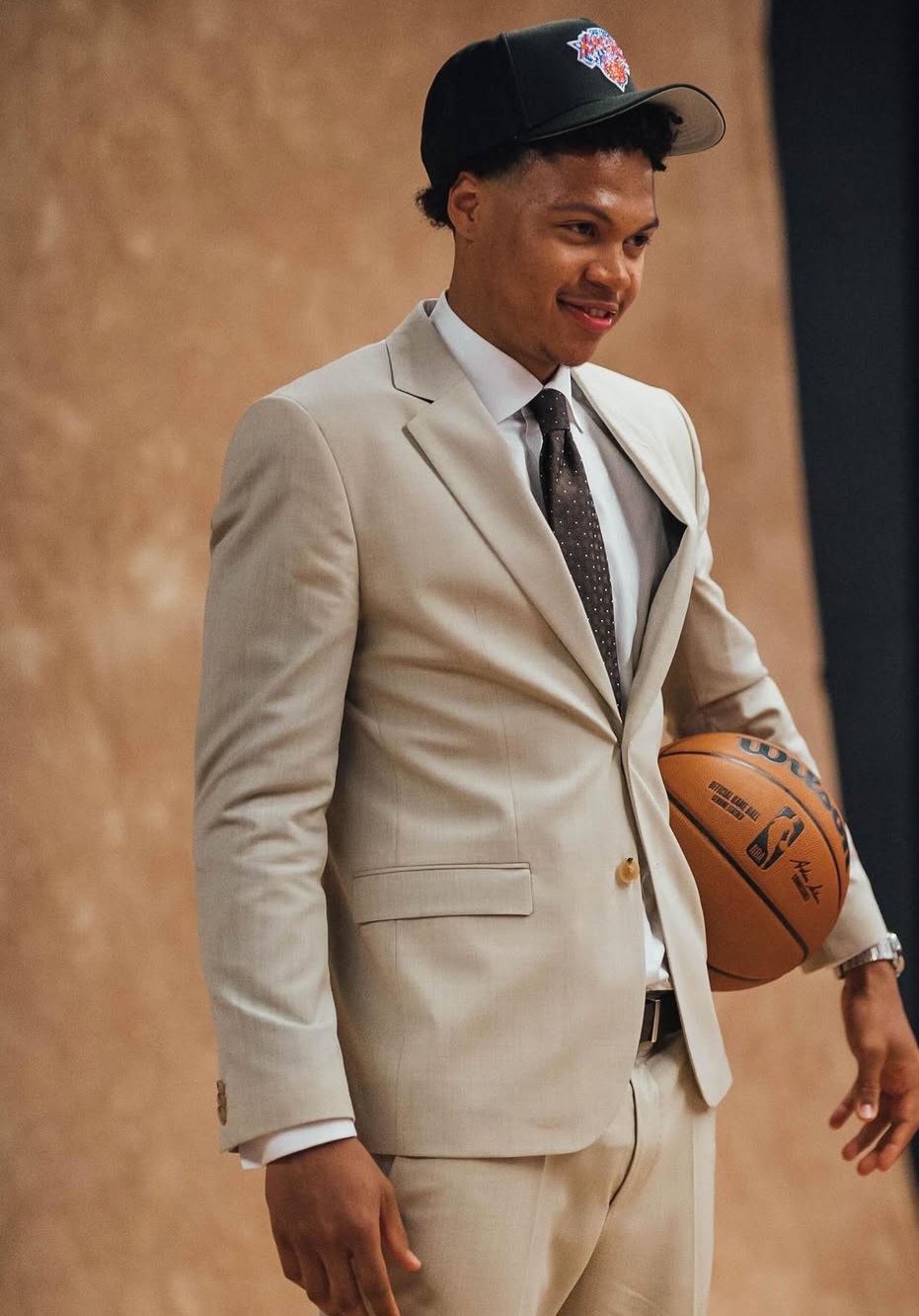
New York, NY—-The New York Knicks entered the 2026 NBA Draft with a clear objective: preserve financial flexibility while finding players who fit the organization’s long-term vision. Rather than selecting a player in the first round, New York executed a series of draft-night trades involving the Los Angeles Lakers, Dallas Mavericks, Phoenix Suns, Houston Rockets, and other clubs before ultimately walking away with two intriguing second-round prospects—guard Jack Kayil and forward Tyler Nickel.
The strategy reflected President Leon Rose’s commitment to building a championship-caliber roster while navigating the NBA’s increasingly restrictive salary cap rules.
Although many fans expected the Knicks to add another first-round talent, the front office instead prioritized roster flexibility. By trading out of the first round, New York avoided the guaranteed salary attached to a first-round contract, an important consideration as the franchise works to remain below the league’s second salary apron. The series of draft-day maneuvers also allowed the Knicks to collect additional future assets while still adding two players the organization believes can develop into valuable contributors.
The Knicks selected German guard Jack Kayil with the 39th overall pick after completing a trade with the Houston Rockets. At just 20 years old, Kayil arrives from ALBA Berlin with an impressive international résumé and a reputation as a high-IQ playmaker capable of defending multiple positions. The versatile combo guard has already expressed his desire to begin his NBA career immediately rather than remain overseas, making him a candidate to split time between New York and the Westchester Knicks as he develops.
New York followed that selection by drafting Vanderbilt forward Tyler Nickel with the 47th overall pick. Nickel brings one of the draft’s most polished shooting strokes after knocking down 40 percent of his three-point attempts during his senior season. His ability to stretch the floor, combined with his toughness and maturity, gives the Knicks another perimeter weapon who could eventually carve out a rotational role for a team looking to defend its NBA championship.
A New Era Begins Without Mitchell Robinson
While the additions of Kayil and Nickel represent the future, the draft also signaled what appears to be the end of an important chapter in Knicks history.
Mitchell Robinson, the franchise’s longest-tenured player and one of the cornerstones of New York’s defensive identity, is expected to depart in free agency. Financial constraints and the organization’s determination to stay below the NBA’s second apron have made it increasingly difficult to retain the veteran center despite his importance to the team’s success.
Originally selected with the 36th overall pick in the 2018 NBA Draft, Robinson developed into one of the league’s premier rim protectors and offensive rebounders. His shot-blocking, interior defense, and relentless effort helped transform the Knicks into one of the NBA’s toughest defensive teams.
During New York’s championship run, Robinson embraced his role as an elite defensive anchor, routinely impacting games without needing the basketball in his hands.
His departure would mark the end of an era. Robinson survived multiple coaching changes, roster rebuilds, and organizational transitions before finally helping bring an NBA championship back to Madison Square Garden. Few second-round selections in franchise history have exceeded expectations the way Robinson did.
Now, the Knicks appear ready to turn the page.
With Karl-Anthony Towns anchoring the frontcourt and younger, more affordable talent entering the pipeline, Leon Rose is continuing to reshape the roster with an eye toward sustaining championship contention rather than simply defending one title.
The 2026 NBA Draft may not have featured a headline-grabbing first-round selection, but it showcased New York’s commitment to long-term roster construction. Jack Kayil and Tyler Nickel provide youth, versatility, and shooting at an affordable cost, while the likely departure of Mitchell Robinson underscores the difficult financial decisions every championship contender must eventually make.
As one chapter closes with Robinson’s expected exit, another begins with two promising young prospects who now have the opportunity to write the next chapter in Knicks basketball.