Phoenix, AZ—–With just one day remaining before the 2026 NFL Draft, the outlook for the Arizona Cardinals remains as unpredictable as ever.
For weeks, speculation has centered around a possible trade-down scenario, with Arizona reportedly exploring ways to accumulate additional draft capital and potentially target quarterback Ty Simpson later in the first round. But as draft night approaches, momentum appears to be shifting in the opposite direction.
Increasingly, projections suggest the Cardinals may simply stay put at No. 3 overall—and make a far more surprising selection than expected.
Running back rising in mock drafts
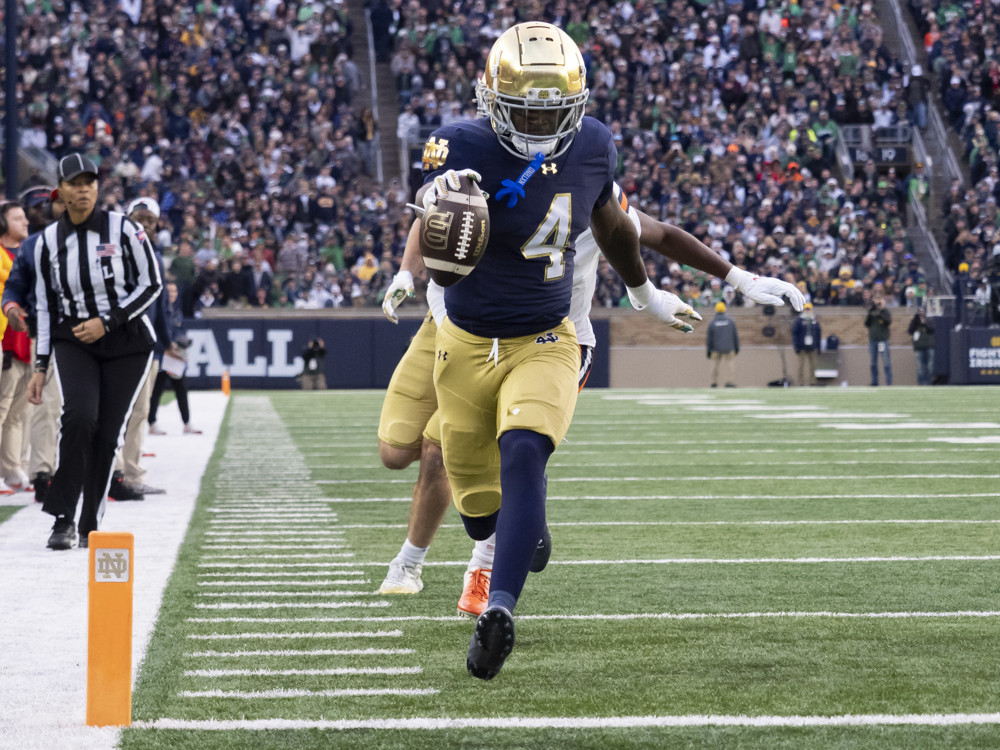
Two major 2026 mock drafts released this week have Arizona selecting running back Jeremiyah Love out of Notre Dame, a move that would send shockwaves through the league.
ESPN analyst Peter Schrager projected Love to the Cardinals, noting that while trade discussions remain active, Arizona could ultimately decide to stay at No. 3 and take the draft’s most dynamic offensive player.
Schrager highlighted Love’s game-changing ability and suggested he could immediately elevate an offense searching for explosiveness, regardless of traditional positional value concerns.
Meanwhile, NFL.com draft analyst Lance Zierlein also mocked Love to Arizona, adding that if a trade doesn’t materialize, the Cardinals are prepared to take the best player available—without overthinking position.
Trade-down vs. stay-put debate
Despite the growing buzz around Love, the Cardinals are still believed to be open to moving back if the right deal emerges. The organization could potentially pick up additional assets while positioning themselves to address quarterback or offensive line needs later in the draft.
Some league chatter suggests internal disagreement on strategy:
Ownership is reportedly intrigued by Love
The front office is believed to prefer defensive edge help, such as David Bailey
However, neither direction is guaranteed, and the final decision could come down to how the board falls on draft night.
Positional value concerns
The idea of taking a running back at No. 3 remains controversial.
Recent first-round running backs include:
Ashton Jeanty (2025)
Bijan Robinson (2023)
Najee Harris (2021)
While Robinson has developed into a star, teams have historically struggled to translate top-five running back selections into sustained team success, raising questions about whether investing that high at the position truly moves a franchise forward.
What Love would bring
There is no debate about Love’s talent. Evaluators believe he has the potential to be a true difference-maker—someone capable of producing at an All-Pro level and impacting both the running and passing game.
Paired with tight end Trey McBride, Arizona could form one of the league’s most dangerous young offensive duos.
Still, questions remain:
Can he elevate a roster still rebuilding on defense?
Will the offensive line—especially the right side—support his development?
Does a star running back meaningfully raise the team’s ceiling in today’s NFL?
Final outlook
The Cardinals are clearly at a crossroads. Trading down for flexibility remains on the table, but so does the possibility of making one of the most aggressive top-five picks in recent draft history.
Jeremiyah Love represents both the upside and the risk of that decision: a potential superstar talent at a traditionally undervalued position.
Whether Arizona plays it safe or swings big, their choice at No. 3 will help define the direction of the franchise moving forward.